


The AI Power Paradox: Navigating the 1,000 TWh Digital Infrastructure Crisis
2026-06-30Executive Summary
The global race for Artificial Intelligence superiority is transforming from a software challenge into a massive physical infrastructure constraint. As Large Language Models (LLMs) grow exponentially, the limiting factor for next-generation data centers is no longer just computational power or data availability—it is the sheer volume and reliability of electricity required to sustain them.
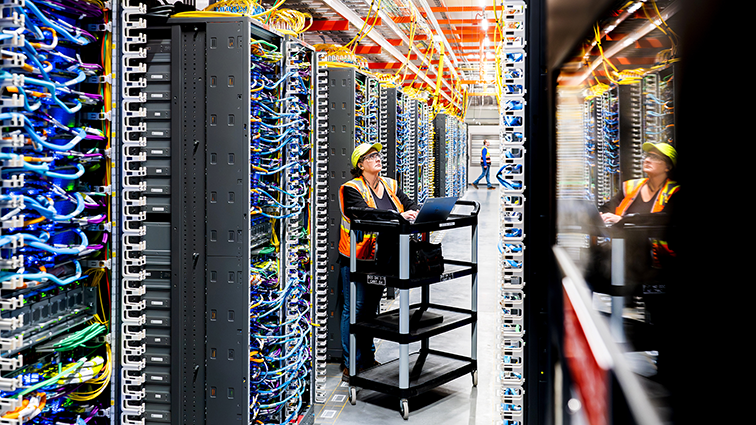
The Macro Data: A 1,000 TWh Reality
According to the latest International Energy Agency (IEA) Electricity analysis, the global power consumption of data centers, AI workloads, and cryptocurrency networks is projected to expand dramatically, potentially exceeding 1,000 TWh.
To comprehend the scale of this demand, consider these key comparisons:
- The National Scale: A 1,000 TWh consumption is roughly equivalent to the entire annual electricity demand of Japan or Germany.
- The Growth Trajectory: This represents a near doubling of the sector's power requirements within less than a five-year window, driven primarily by the high-density cooling and intense compute cycles of generative AI.
High-Density AI Clusters and the Local Grid Strain
Standard legacy data centers typically operated on a power density of 4 kW to 10 kW per rack. In stark contrast, modern AI clusters deploying advanced GPU frameworks demand 40 kW to 100 kW+ per rack.
This unprecedented surge creates a two-fold vulnerability for enterprise facility managers and hyperscalers:
1. Grid Volatility: Centralized municipal grids in high-growth digital hubs are struggling to scale infrastructure at the speed of technological adoption, leading to increased risks of voltage drops and micro-interruptions.
2. The Cost of Interruption: For high-performance computing, even a millisecond power fluctuation can corrupt deep learning training checkpoints, resulting in weeks of lost computational progress and millions of dollars in operational setbacks.
Architecting Tomorrow’s Resilient Infrastructure
To thrive in the era of AI-driven computing, data center architects and infrastructure leaders must shift their focus from mere energy efficiency (PUE) to absolute operational resilience.
Securing the future of digital infrastructure requires a comprehensive, multi-layered power strategy. Relying solely on a single utility source is no longer a viable risk-mitigation framework. True business continuity demands a highly independent, redundant secondary power architecture capable of instantaneous response, ensuring that the critical algorithms driving global progress never experience a single moment of darkness.